

The Changing Reality of the Construction Industry
Let’s be brutally honest for a second.
Construction has never been easy. Tight deadlines, demanding clients, unpredictable site conditions — that’s normal. But 2026? That’s a whole different beast.
Margins are tighter. Competition is louder. Clients are more impatient. And contractors? They’re drowning in tasks that have nothing to do with actual construction.
Rising Costs and Shrinking Margins
Material prices fluctuate. Labor costs climb. Overheads quietly eat profits like termites chewing through wood. Every extra dollar spent hurts more than it used to.
Now here’s the uncomfortable question:
Why are you still spending thousands on full-time administrative staff when half of those tasks don’t even require someone physically present?
Payroll, benefits, office space, equipment — the hidden expenses pile up fast. And suddenly, that “necessary hire” becomes a financial burden.
The Administrative Overload Problem
Most contractors didn’t start their businesses to answer emails all day.
Yet here we are.
Quotes, invoices, supplier coordination, client follow-ups, scheduling headaches, document management — it never stops. It’s like trying to build a house while someone keeps handing you paperwork every five minutes.
Eventually, something breaks.
Usually, it’s your time.
What’s Really Eating Contractors’ Time?
Let’s strip away the illusion of productivity.
Being busy isn’t the same as being effective.
Paperwork, Emails, and Scheduling Chaos
Your inbox is full. Your phone never stops ringing. Your calendar looks like a battlefield.
Sound familiar?
Every small interruption fragments your focus. Every email steals mental energy. Every scheduling conflict triggers stress.
It’s death by a thousand cuts.
None of these tasks generate revenue directly, yet they consume hours — hours that could have been spent closing deals, supervising projects, or planning growth.
Lead Follow-Ups and Missed Opportunities
Here’s a painful truth most contractors ignore:
Leads don’t die because of pricing.
They die because of delays.
Slow responses. Forgotten callbacks. Lost inquiries buried in WhatsApp chats or emails.
Potential clients move on fast. In 2026, patience is a luxury nobody has.
What Does a Virtual Assistant Actually Solve?
A virtual assistant isn’t just “extra help.”
It’s operational leverage.
Like adding a second brain to your business — one that handles the noise so you can focus on decisions that matter.
Administrative Efficiency
Scheduling. Email management. Document organization. Data entry. Reporting.
All the tasks that drain your time but still must be done.
A VA clears this clutter like a pressure relief valve.
Sales and Lead Management
Lead tracking. CRM updates. Follow-ups. Appointment setting.
Instead of reacting chaotically, your sales process becomes structured and predictable.
Operations and Coordination
Vendor communication. Client updates. Project documentation.
Your business starts running smoother — not because you’re working harder, but because the system is better.
Why 2026 Is Different
Timing matters.
And right now? Timing is critical.
Digital Competition Is Fierce
Every contractor is online. Every competitor is visible. Every client is comparing options.
If your communication is slow or inconsistent, you don’t just lose visibility — you lose trust.
Clients Expect Instant Responses
People expect Amazon-level responsiveness.
They want quick quotes. Fast answers. Immediate updates.
Anything slower feels unprofessional.
Speed = Competitive Advantage
In construction, speed isn’t just about project completion.
It’s about decision-making, communication, and execution.
Virtual assistants help you move faster where it actually counts.
The Hidden Cost of Doing Everything Yourself
Let’s talk about something rarely discussed.
Burnout and Decision Fatigue
Every small decision drains cognitive energy.
Replying to emails. Confirming schedules. Tracking invoices. Following up leads.
Your brain becomes overloaded. Judgment suffers. Stress rises.
It’s like running a marathon while carrying bricks.
Revenue Lost to Delays
Delayed responses = lost contracts.
Delayed invoices = delayed payments.
Delayed follow-ups = dead leads.
Time inefficiency quietly kills profit.
Virtual Assistants vs Hiring In-House Staff
This is where logic should win over ego.
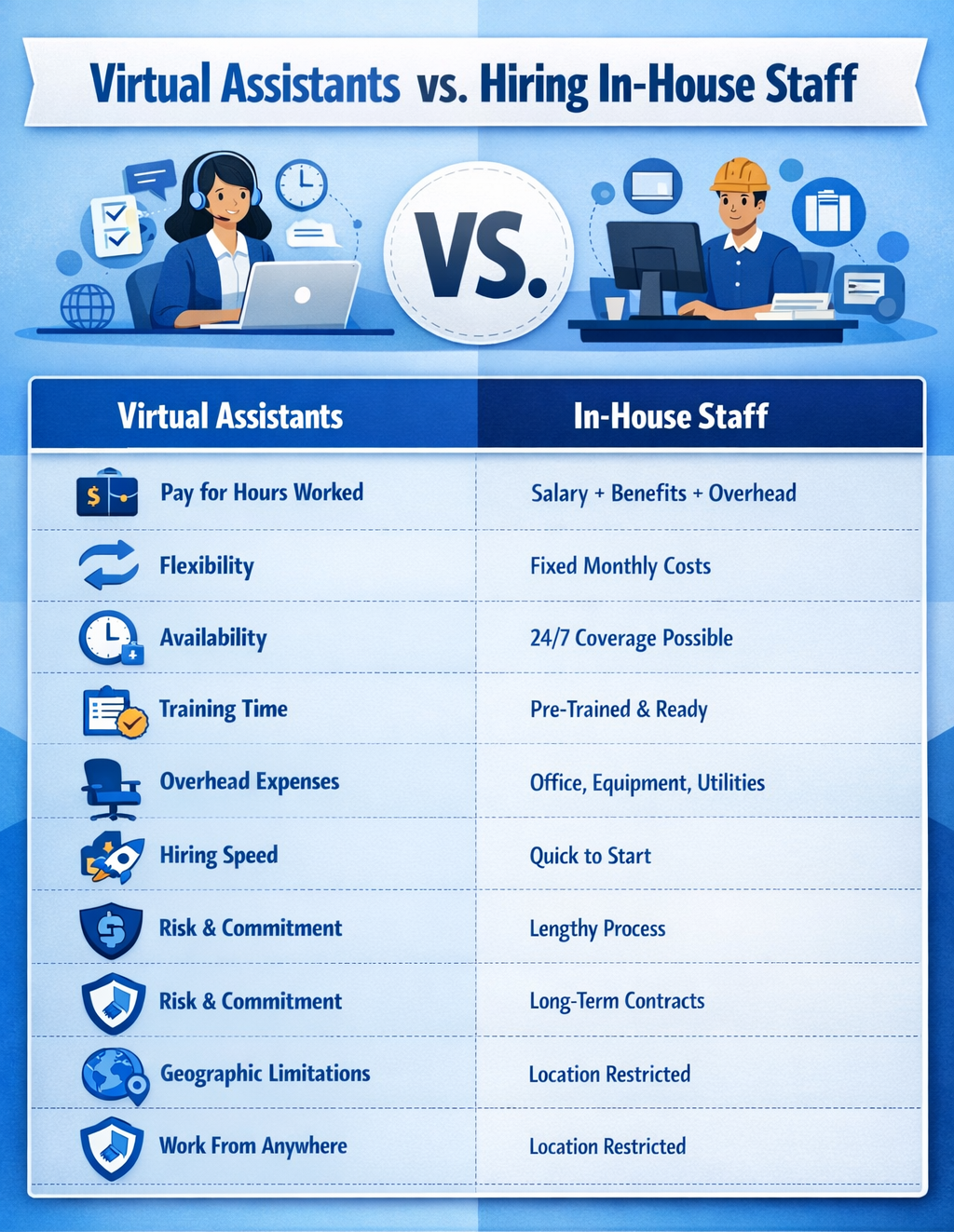
High-Impact Tasks Contractors Should Delegate
Delegation isn’t about dumping tasks.
It’s about reclaiming strategic focus.
Scheduling & Calendar Management
Meetings, site visits, calls — organized without chaos.
Estimation & Documentation Support
BOQs, takeoffs, reports, revisions — handled efficiently.
CRM & Lead Tracking
No more lost leads or forgotten follow-ups.
Invoicing & Billing Coordination
Cash flow stability improves dramatically.
How VAs Improve Cash Flow
Cash flow is the oxygen of a construction business.
Virtual assistants protect it.
Faster Invoices
No delays, no backlog.
Better Follow-Ups
Payments don’t slip through cracks.
Fewer Billing Delays
Revenue cycles tighten.
Virtual Assistants as Growth Accelerators
Growth isn’t just about more projects.
It’s about better systems.
More Time for High-Value Work
Sales. Strategy. Client relationships.
Better Client Experience
Faster responses. Clear communication. Professional consistency.
Trust compounds.
Common Misconceptions About Virtual Assistants
Let’s dismantle some myths.
“They Won’t Understand Construction”
Industry-trained VAs exist. Specialization matters.
“Communication Will Be Hard”
Modern tools eliminate friction.
“Training Takes Too Long”
Structured onboarding solves this quickly.
Why Smart Contractors Are Adopting VAs Early
Early adopters gain leverage.
Late adopters play catch-up.
Competitive Edge
Better responsiveness. Better organization. Better perception.
Operational Stability
Less chaos. More predictability.
How to Know If You’re Ready for a VA
Simple diagnostic:
Are you constantly busy but still behind?
Warning Signs
Missed calls. Delayed emails. Admin backlog.
Growth Indicators
Increasing leads. Expanding workload. Scaling pressure.
Final Thoughts
In 2026, construction success isn’t just about building structures.
It’s about building systems.
Virtual assistants aren’t a luxury anymore. They’re infrastructure — like scaffolding for your operations.
Ignore them, and inefficiency compounds.
Leverage them, and your business runs lighter, faster, and smarter.
FAQs
1. Are virtual assistants really useful for contractors?
Yes. Especially for administrative, sales, and coordination tasks that drain time.
2. Is hiring a VA cheaper than in-house staff?
In most cases, significantly.
3. Can VAs handle technical construction tasks?
With proper specialization and training, absolutely.
4. Will communication be difficult?
Modern collaboration tools make this a non-issue.
5. When should a contractor hire a VA?
The moment administrative workload starts limiting growth.